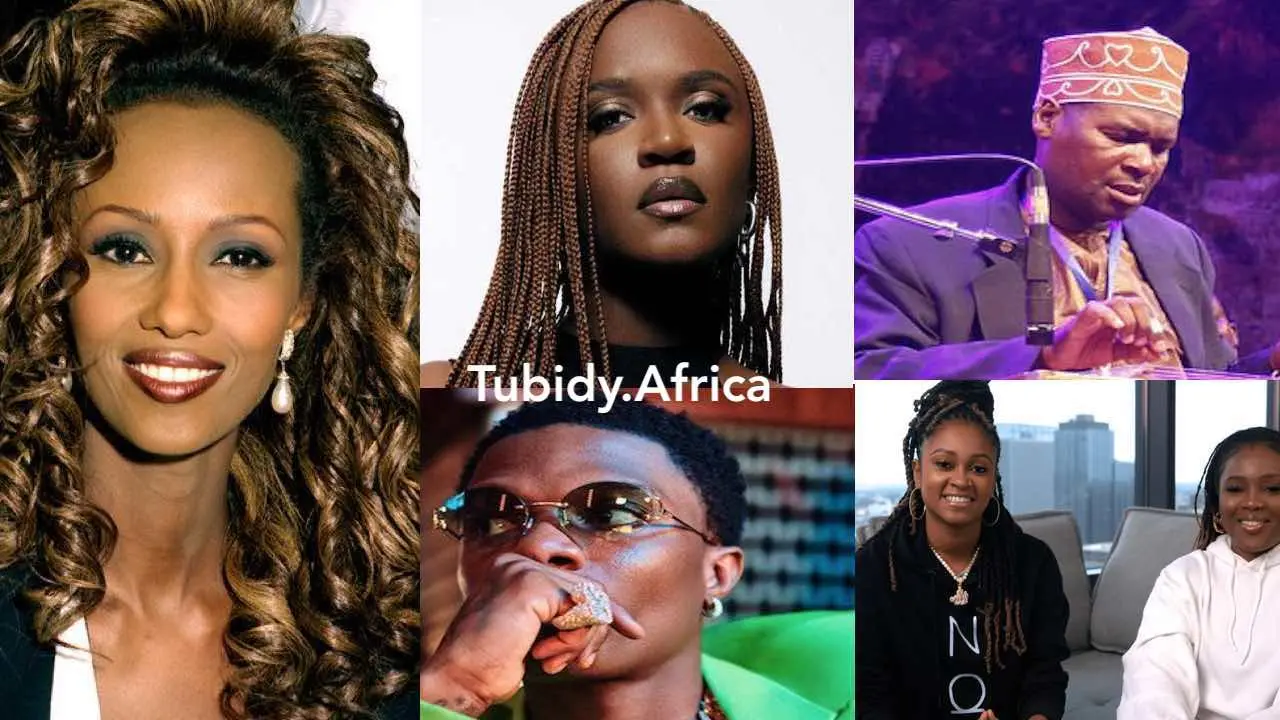
The best new African artists right now include Chella, Qing Madi, Taves, Usimamane, King Paluta, D Voice, and Azawi, each backed by real chart data, platinum certifications, and Billboard recognition. These are not predictions. These are artists already delivering proven commercial results across Nigeria, South Africa, Ghana, Tanzania, and Uganda.
| Artist | Country | Genre | Breakthrough Credential |
|---|---|---|---|
| Chella | Nigeria | Afropop / Afrobeats | “My Darling”: most Shazamed song in the world at peak |
| Qing Madi | Nigeria | Afrobeats / R&B / Alté | Billboard African Rookie of the Month (February) |
| Taves | Nigeria | Afropop / R&B / Soul | Atlantic Records UK deal; Billboard African Rookie (March) |
| Usimamane | South Africa | Melodic Rap / Trap / R&B | “Cheque”: 3x Platinum South Africa; Apple Music Rap Life Africa |
| King Paluta | Ghana | Hiplife / Asakaa / Hip-hop | “Give Time Some Time”: international critical acclaim |
| D Voice | Tanzania | Bongo Flava / Singeli | Signed to WCB Wasafi Records (Diamond Platnumz’s label) |
| Azawi | Uganda | Afrofusion / Luganda soul | First female Ugandan artist on Times Square billboard |
Chella (Nigeria): The Artist Who Hit the Top of Shazam
Chella’s “My Darling” became the most Shazamed song in the world at its peak, a milestone no African artist had reached in recent memory with a debut-level release. The Nigerian singer delivers lyrics in both Igbo and Nigerian Pidgin English, making the song accessible to millions across West Africa and the diaspora simultaneously.
Rolling Stone listed “My Darling” among the best Afropop songs of its release period. The track soundtracked over 7 million TikTok videos, pushing it beyond viral moment territory into cultural record. The song is also eligible for South Africa RISA Gold certification, proving its reach extended well beyond Nigeria.
What Makes Chella a Best New African Artist
- Bilingual delivery: He raps and sings in Igbo and Pidgin English, giving his music natural Pan-African appeal
- Genre position: He blends street authenticity with romantic vulnerability, a combination that’s rare in Nigerian Afropop right now
- Strategic catalogue building: His EP “Tears of a Mad Man” featured cross-continental collaborators, extending his reach beyond a single viral hit
- Shazam record: Hitting number 1 on Shazam’s global chart is verified commercial proof, not a prediction
Chella represents exactly the kind of rising African music star who crosses over without abandoning local cultural identity.
Qing Madi (Nigeria): The Teenager Writing Songs for Stars
Qing Madi, born Chimamanda Pearl Chukwuma on July 1, 2006, was writing songs professionally for established Nigerian artists before she released her own music. Her client list included Skales, Iyanya, and Larry Gaaga. She started posting TikTok covers and Instagram freestyles to build an audience while ghostwriting for others. That discipline and craft awareness came through clearly when she finally stepped forward as a solo act.
Her breakthrough single “See Finish” arrived in 2022 after she freestyled over a beat in the studio while recording backup vocals for Blaqbonez. Billboard named her African Rookie of the Month for February, the second artist in the publication’s new series dedicated to spotlighting emerging African voices who break genre boundaries. Her follow-up “Ole” featuring BNXN widened her audience across the Afrobeats, R&B, and alté scenes.
Qing Madi at a Glance
| Detail | Info |
|---|---|
| Real Name | Chimamanda Pearl Chukwuma |
| Origin | Benin City, Edo State, Nigeria |
| Label | JTON Music |
| Breakout Singles | “See Finish” (2022), “Ole” feat. BNXN (2023) |
| Billboard Recognition | African Rookie of the Month: February |
| Instruments | Vocals, piano, keyboard, drum machine |
| Training | Ballet dancer; professional songwriter from age 16 |
Qing Madi is one of the freshest female voices in Nigerian music right now. Among the most successful African female artists who broke through at a young age, her trajectory most closely mirrors Tems. Raw, specific, emotionally honest music that resists easy genre labels.
Taves (Nigeria): Atlantic Records’ Genre-Bending New Voice
Taves, real name Toluwanimi Aluko, signed to Atlantic Records UK and earned his place on BNXN’s debut album “Sincerely, Benson” before most music fans outside Nigeria knew his name. At 21, he blends Afropop, R&B, soul, and 80s synthwave into a sound he calls “a new third thing”, a deliberate departure from the standard Afrobeats template.
His song “Folake” is his biggest commercial moment, a lovelorn synthpop ballad with Weeknd-influenced production that Rolling Stone placed on their best Afropop songs list. Billboard named Taves African Rookie of the Month for March, following Qing Madi and Odeal in the series. His EP “Are You Listening?” reinforces the genre-fluid identity he has built.
Why Taves Matters for New African Music
- Label muscle: Atlantic Records UK signals international confidence in his sound beyond the African market
- Sonic originality: He consciously references Aṣa’s guitar-led introspection and Ed Sheeran’s lyric depth, then puts them inside Afropop production
- Billboard African Rookie series: He is one of only 3 artists named in the first months of Billboard’s dedicated African Rookie spotlight
- Genre discipline: Unlike many new artists chasing trend sounds, Taves builds from a consistent R&B and folk songwriting core
He grew up listening to music on road trips between Ibadan and Port Harcourt. That slow, reflective sonic diet shows in every chord choice he makes. He belongs in any conversation about breakthrough African music artists operating outside the mainstream formula.
Usimamane (South Africa): Triple Platinum From Durban’s Streets
Usimamane, born Omuhleumnguni Simamane on October 10, 2003, is a South African rapper from Umlazi, Durban, whose breakthrough single “Cheque” achieved 3x Platinum certification in South Africa. He describes his music as “fate music”, covering themes of hope, honesty, and introspection drawn from Durban township culture and shaped by Zulu lyricism.
Apple Music selected him as Rap Life Africa, the platform’s featured artist designation for the continent’s leading rap voice. His debut album “20th: Days Before Maud” broke Spotify South Africa’s record for the highest second-day streams, surpassing 332,000 streams in a single day. The album track “Uvalo” featuring Sjava debuted at number 4 on the Local Streaming Top 10 before climbing to number 1 within a week.
Usimamane by the Numbers
| Milestone | Fact |
|---|---|
| Hometown | Umlazi, Durban, South Africa |
| Breakout Single | “Cheque”: 3x Platinum (RISA) |
| Apple Music Recognition | Rap Life Africa featured artist |
| Debut Album | “20th: Days Before Maud” |
| Spotify South Africa Record | 332,000+ second-day streams (biggest in SA history at release) |
| Chart Peak | “Uvalo” feat. Sjava: #1 Local Streaming Top 10 |
He draws influence from local legend Brenda Fassie and international figures including Drake. That combination of township roots and global rap awareness makes his music land differently from the standard South African rap template. South African music fans tracking the Amapiano and hip-hop crossover in South Africa should pay close attention to where Usimamane takes his sound next.
King Paluta (Ghana): Kumasi’s Hiplife Storyteller
King Paluta, real name Thomas Adjei Wireko, is a Ghanaian rapper, singer, and producer from Atonsu, Kumasi in the Ashanti Region. Kumasi is the cultural home of hiplife and Asakaa (Ghanaian drill), and King Paluta grew up absorbing both. His music fuses traditional Ghanaian rhythms with hip-hop beats, humor, and sharp social commentary in a way that feels specific to where he grew up.
His album “Give Time Some Time” earned international critical praise and placed him at the front of Ghana’s new music conversation. OkayAfrica described him as one of Africa’s 12 artists to watch, noting his immediate, in-your-face energy and his ability to “say the right things in the most unexpected ways.” He works across hiplife-inflected bops and R&B records without losing his identity in either lane.
King Paluta vs. the Ghanaian Music Scene
- Genre base: Hiplife and Asakaa, two genres that remain underrepresented in global African music coverage
- Lyrical style: Social commentary, intricate wordplay, and humor, a combination that places him alongside Ghana’s greatest storytellers
- Production approach: He produces his own beats, giving him full creative control over his output
- Cultural roots: Kumasi-specific cultural references give his music a geographic authenticity that stands apart from Accra-based acts
Frequently Asked Question users search: is Ghanaian music as big as Nigerian music? Ghana’s new artists like King Paluta and Gyakie are proving the question is the wrong one to ask. Ghana produces some of Africa’s most genre-diverse voices. The full range of African music genres shows just how wide that talent pool runs.
D Voice (Tanzania): WCB Wasafi Records’ Newest Star
D Voice, born Abdul Hamisi Mtambo on October 10, 2004, is the newest signing to WCB Wasafi Records, the label owned by Diamond Platnumz, East Africa’s biggest music export. At 20, he has already recorded with Zuchu and Mbosso, two of the most established names in Tanzanian music.
He operates at the intersection of Singeli and Bongo Flava, two distinctly Tanzanian sounds that rarely receive the international coverage they deserve. Afrocritik named him one of 25 emerging African artists worth hearing, calling him “the latest jewel” of WCB Wasafi Records. For fans of East African music, D Voice represents the natural next step in a label known for breaking artists who go on to dominate the continent.
Read more about the label’s history and the broader East African star who built it: Diamond Platnumz as East Africa’s superstar explains exactly why a WCB deal carries the weight it does. And if Bongo Flava is new to you, D Voice is the right entry point for that sound right now.
Azawi (Uganda): East Africa’s Afrofusion Force
Azawi is a Ugandan Afrofusion artist who became the first female Ugandan act to appear on a Times Square and Los Angeles billboard, joining Eddy Kenzo and Bobi Wine as the only 3 Ugandans ever featured on those platforms. She sings primarily in Luganda, blending it with Afrofusion production that has connected with audiences in Kenya, Nigeria, and Tanzania simultaneously.
Her music covers love, identity, and resilience without ever sounding generic. Afrobeats fans are used to artists from Nigeria and Ghana. Azawi is building a case that Uganda produces world-class Afrofusion talent that has been overlooked in global music journalism. Her viral track “Champion” charted in 3 countries across East and West Africa, which is an exceptional cross-regional achievement for any East African artist.
Why Azawi Stands Out Among New African Artists
- Language choice: Luganda-language Afrofusion is genuinely rare in a market where English and Yoruba dominate
- Regional chart reach: “Champion” charted in Kenya, Nigeria, and Tanzania, across 3 separate music markets with distinct tastes
- Billboard visibility: Times Square and LA billboard placements signal international PR infrastructure behind her career
- Sold-out concerts: Her sold-out show at Lugogo, Kampala confirmed her as a live draw, not just a streaming artist
What Separates the New Wave From Earlier African Music Stars
The best new African artists today operate with a global-first mindset from their very first release. Earlier generations of African artists often built regional audiences before attempting international crossover. Chella’s “My Darling” was the most Shazamed song globally before most international journalists had written a profile on him. That timeline compression is new.
3 key differences define the new wave:
- TikTok as the primary launch platform: “My Darling” soundtracked over 7 million TikTok videos. That kind of organic spread was impossible for older African artists working with slower discovery tools
- Genre refusal: Taves explicitly rejects the “Afrobeats” label for his music. Qing Madi operates across alté, R&B, and Afrobeats simultaneously. The new wave refuses the single-genre box
- Multilingual storytelling: Chella uses Igbo and Pidgin. Azawi sings in Luganda. Usimamane weaves Zulu into trap production. Language plurality is a feature, not a compromise
These artists sit alongside the established names already shaping African music globally. For full context on the continent’s biggest artists right now, see the top 50 famous African music artists. For the institutional side of how new Nigerian talent gets developed, Mavin Records remains the most important label to understand. The BET Awards African nominees list also tracks which new artists are entering mainstream recognition fastest.
Best New African Female Artists Right Now
Among the best new African female artists, Qing Madi (Nigeria) and Azawi (Uganda) lead the current wave. Both operate with distinct voices, specific cultural identities, and career momentum backed by real credentials rather than hype cycles.
Established stars like Ayra Starr, Tiwa Savage, and Libianca already hold the top positions in African female music globally. The new wave of female artists coming up behind them understands what a global moment looks like and builds toward it intentionally. South Africa’s female Amapiano artists also deserve a mention as a distinct group reshaping African music from the south.
Best New African Rap Artists to Watch
South African rap has produced the most commercially credible new voice in Usimamane, while Nigeria continues to develop artists like Taves who blur rap and R&B into something harder to categorize. Ghana’s King Paluta brings a hiplife and Asakaa perspective that neither Nigeria nor South Africa can replicate.
Rap across Africa now sounds genuinely different depending on geography:
- Nigeria: Afropop-rap fusion; melodic delivery; Pidgin and Yoruba lyricism
- South Africa: Trap production; Zulu and isiZulu lyricism; melodic rap closer to US R&B in tempo and feel
- Ghana: Hiplife rhythms; Twi lyricism; social commentary-heavy content; Asakaa drill on the younger end
- East Africa: Gengetone in Kenya; Singeli in Tanzania; Ugandan rap growing through Azawi-adjacent scenes
Understanding the difference between Afrobeats and Afrobeat helps place these regional rap sounds in proper context for anyone new to African music.
Frequently Asked Questions About Best New African Artists
The best new African artists right now are Chella (Nigeria), Qing Madi (Nigeria), Taves (Nigeria), Usimamane (South Africa), King Paluta (Ghana), D Voice (Tanzania), and Azawi (Uganda). Each one is backed by verified chart data, label signings, or major platform recognition such as Billboard’s African Rookie series or Apple Music’s Rap Life Africa designation.
Chella holds the most internationally visible chart achievement among new African artists, with “My Darling” reaching number 1 on Shazam’s global chart. Usimamane leads among South African new artists with his “Cheque” single earning 3x Platinum certification from RISA. Qing Madi and Taves both earned Billboard African Rookie of the Month recognition in the same year.
The best new African artists deliberately resist single-genre labels. Taves calls his sound “a new third thing” separate from Afrobeats. Qing Madi moves across Afrobeats, R&B, and alté. Chella blends Afropop with street music and bilingual lyricism. Usimamane makes melodic trap with Zulu language influence. King Paluta works in hiplife and Asakaa.
Yes. Azawi from Uganda and D Voice from Tanzania are two of the strongest new African artists from East Africa right now. Azawi sings in Luganda and her track “Champion” charted in 3 countries. D Voice is signed to WCB Wasafi Records, Diamond Platnumz’s label, and has already collaborated with Zuchu and Mbosso.
New African artists get international recognition primarily through TikTok virality, Shazam chart placement, streaming platform editorial features like Apple Music Rap Life Africa, and publications like Billboard’s African Rookie of the Month series.
Tubidy Take
The best new African artists are not waiting for permission or a Western co-sign to build global audiences. They arrive with specific sounds, real credentials, and multilingual storytelling rooted in place. From Lagos to Durban, Kumasi to Kampala, the continent’s next generation of musicians is already delivering results that older industry pathways could never have produced this fast. Follow all of it on Tubidy Africa, the home for African music news. For the artists who came before this new wave and built the foundation they’re standing on, read the top 50 famous African music artists and see exactly what excellence in this industry looks like over time.