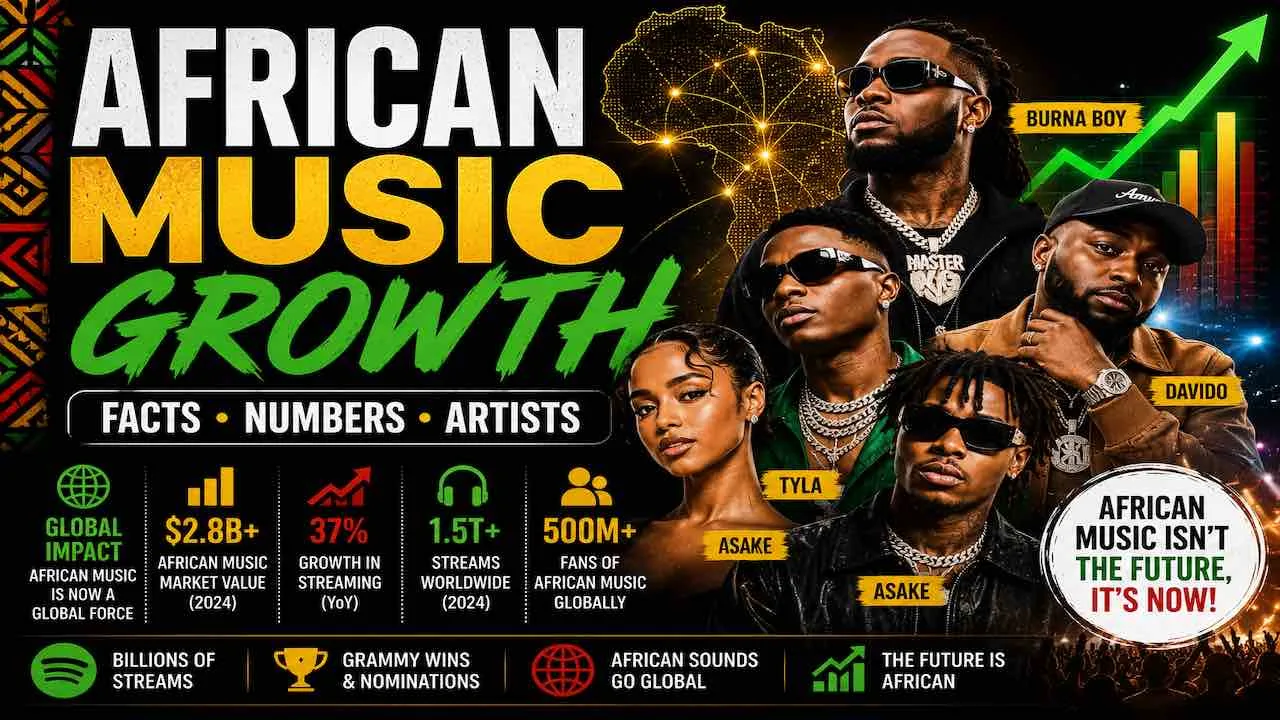
African music is growing fast because streaming access expanded across the continent. Diaspora audiences also fuel global demand. In addition, major labels now sign African artists directly instead of routing them through Western intermediaries. As a result, Afrobeats streams rose 34% globally in a single year. Meanwhile, Sub Saharan Africa posted the fastest recorded music revenue growth of any region tracked by IFPI. This article breaks down the exact numbers, the platforms driving them, and the artists behind the surge. For daily African music news, artist updates, and industry coverage, check Tubidy.Africa’s latest African music news.
How Fast Is African Music Actually Growing
African music revenue grew faster than any other global region in the most recent IFPI reporting cycle. Specifically, Sub Saharan Africa’s recorded music revenue reached 120 million dollars, growing 15.2% year over year. This ties with the Middle East and North Africa for the fastest growth rate worldwide. Separately, Spotify reported a 114% jump in music consumption across Sub Saharan Africa. That figure outpaces nearly every other listening market on the platform.
| Metric | Figure | Source |
|---|---|---|
| Sub Saharan Africa recorded music revenue | 120 million dollars, up 15.2% | IFPI Global Music Report |
| Afrobeats global stream growth (annual) | 34% | Spotify data |
| Music consumption growth in Sub Saharan Africa | 114% | Spotify |
| Amapiano streams outside Africa | 61% of total plays | Spotify / OkayAfrica |
| South Africa’s share of regional music revenue | 78.1% | IFPI |
What Is Driving African Music’s Growth
Four factors explain the surge. First, cheaper smartphones and mobile data widened access. Second, diaspora led playlist and TikTok promotion spread songs fast. Third, international label investment brought bigger budgets. Finally, award recognition legitimized the genre for new listeners.
Mobile Access and Cheaper Data
Streaming in Africa runs almost entirely through mobile phones rather than desktop apps or physical media. Lower cost smartphones and falling data prices opened Spotify, Apple Music, Audiomack, and Boomplay to millions of first time streamers. This shift touched Nigeria, South Africa, Ghana, and Kenya alike. Still, around 55% of African music consumers prefer download to own models over live streaming because of inconsistent connectivity. This detail shapes how platforms design their African market products.
Diaspora Audiences and Global Playlists
Nigerian, Ghanaian, and South African communities living abroad push local hits onto international charts. Often, they do this before Western radio catches on. For example, editorial playlists such as Spotify’s African Heat carry over one million followers. Today, these playlists function as cultural platforms rather than simple song lists. Additionally, user curated Afrobeats playlists collectively hold more than 700,000 saves. Those signals feed directly into how the platform’s algorithm ranks and recommends new releases.
Grammy and Award Recognition
The Recording Academy introduced the Best African Music Performance category. Then, Tyla won it twice in a row for “Water” and “Push 2 Start.” That consecutive win pushed Amapiano into mainstream award conversations alongside Afrobeats. Consequently, labels now have a data point to justify bigger marketing budgets for African signings.
Which African Genres Are Growing Fastest
Afrobeats and Amapiano lead the growth. However, each genre grows through a different mechanism.
- Afrobeats built its global reach through agency backed touring deals, with UTA signing Wizkid, Burna Boy, and Tyla early and formalizing festival routes across Europe and the Americas.
- Amapiano spread through short form video platforms, where its log drum bass and drop friendly structure made it a natural fit for TikTok edits and adverts.
- Afropiano, a fusion of both sounds popularized by artists such as Davido and Asake, now drives some of the biggest individual streaming spikes on the continent.
- Highlife and Hiplife from Ghana continue to shape production choices in newer Afrobeats records without charting as independently as the two leading genres.
South Africa remains the largest recorded music market on the continent. It generates 78.1% of Sub Saharan Africa’s total music revenue and grew 12.9% in the most recent measured year, largely on the strength of Amapiano streaming. To see which artists carry that Amapiano sound, check our list of South Africa’s top female Amapiano artists.
Which Artists Are Driving the Numbers
A small group of artists accounts for most of the chart movement and touring revenue behind African music’s rise.
| Artist | Key Milestone |
|---|---|
| Wizkid | First African artist to pass 10 billion career streams |
| Burna Boy | First African artist to headline a UK stadium (London Stadium) |
| Tyla | Back to back Best African Music Performance Grammy wins |
| Rema | “Calm Down” set streaming records for a Nigerian solo artist |
| Kabza De Small | First South African Amapiano album to reach the Spotify Global Album Charts top 10 |
Wizkid and Asake’s single “Jogodo,” released in January, passed 64 million Spotify streams within months. It held placement on major algorithmic playlists throughout that run, showing how fast a well positioned single can scale once diaspora and playlist support align. For a closer look at two of Nigeria’s biggest names, read our Davido versus Wizkid comparison.
Do African Artists Actually Get Paid Fairly
No, African artists still capture a small fraction of the revenue their music generates worldwide. Globally, recorded music revenue sits near 29.6 billion dollars a year. By comparison, Sub Saharan Africa’s 120 million dollar share represents less than half a percent of that total, despite driving some of the biggest cultural moments in global pop. Streaming rates per play also remain lower in African markets than in the US or UK. On top of that, weak royalty collection systems in several countries mean many artists never receive full payment for the plays they generate. IFPI’s Regional Director for Sub Saharan Africa, Angela Ndambuki, has acknowledged this gap publicly at industry events including France Music Week in Paris. For deeper context on how this affects rising talent, see our roundup of best new African artists to watch, and our regional feature on Central Africa’s breakthrough music artists.
Frequently Asked Questions
African music is popular right now because mobile streaming access expanded rapidly. At the same time, diaspora communities push tracks onto global playlists, and major labels now invest directly in African artists rather than treating the region as a niche market.
Afrobeats is a West African pop genre built on highlife, dancehall, and hip hop influences. Amapiano, on the other hand, is a South African house subgenre defined by deep log drum basslines and jazz inflected piano melodies.
Amapiano shows the fastest individual growth in international streams, with 61% of its plays now coming from outside Africa. Still, Afrobeats holds the larger overall global footprint and touring infrastructure.
Sub Saharan Africa’s recorded music revenue reached 120 million dollars, with 15.2% year over year growth. This makes it one of the two fastest growing music regions in the world according to IFPI.
Most African artists receive a small share of global streaming revenue. This happens because per stream payouts are lower in African markets, and royalty collection systems in several countries remain underdeveloped compared to the US and UK.